Introduction to Chips in Autonomous Driving
The rapid advancement of autonomous driving technology has been made possible largely due to the development and integration of specialized semiconductor chips. These chips form the backbone of self-driving systems, enabling real-time data processing, sensor fusion, decision-making, and vehicle control. As vehicles become more intelligent, the demand for high-performance, low-latency computing solutions continues to grow.
Types of Chips Used in Autonomous Vehicles
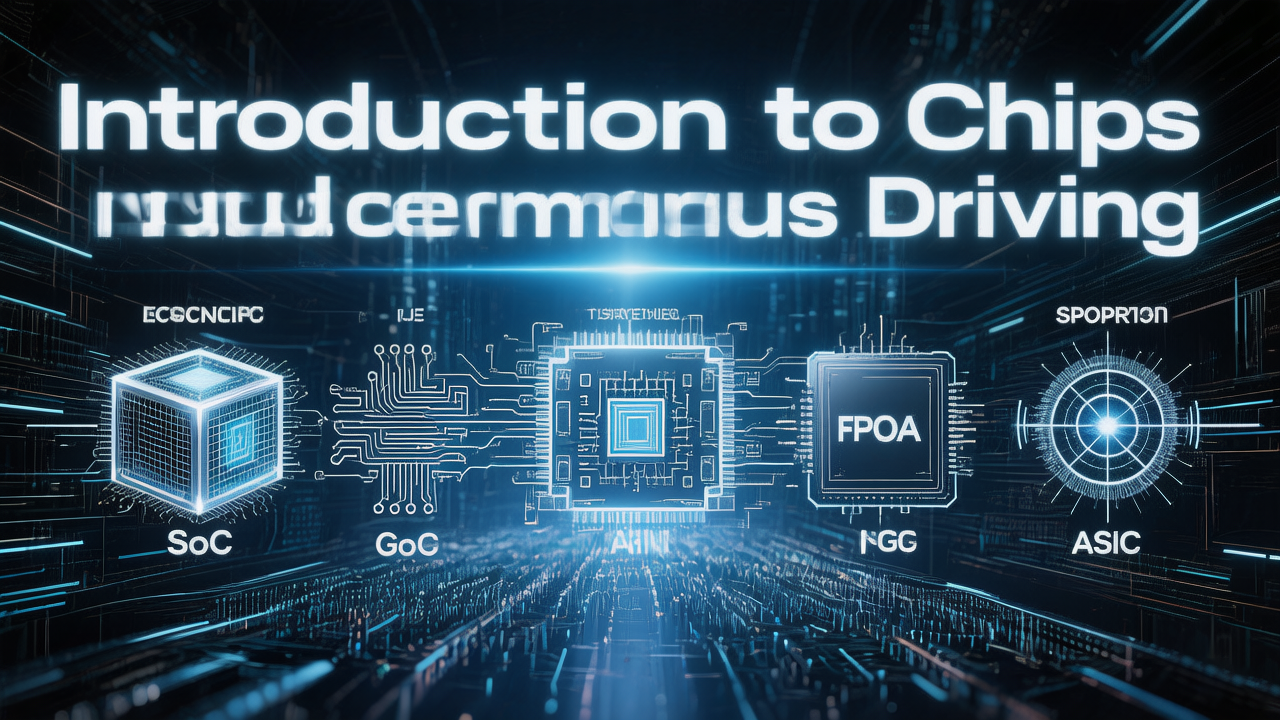
Autonomous driving systems rely on several categories of chips, each serving a distinct function within the vehicle’s architecture:
- System-on-Chip (SoC) Processors: These are the central processing units designed specifically for AI and machine learning tasks. Examples include NVIDIA's DRIVE platform and Tesla's Full Self-Driving (FSD) chip.
- Graphics Processing Units (GPUs): Widely used for parallel processing of visual data from cameras and LiDAR systems. NVIDIA’s GPUs dominate this space due to their computational power and support for deep learning frameworks.
- Field-Programmable Gate Arrays (FPGAs): Offer reconfigurable hardware that can be optimized for specific algorithms, making them ideal for prototyping and edge computing applications.
- Application-Specific Integrated Circuits (ASICs): Custom-designed chips tailored for particular functions such as neural network inference or sensor data preprocessing. Tesla’s FSD chip is a prime example of an ASIC built for autonomy.
- Sensors and Perception Chips: Include image signal processors (ISPs), radar signal processors, and time-of-flight (ToF) controllers that handle raw data from cameras, radars, and ultrasonic sensors.
Key Players and Technologies
Major semiconductor companies are investing heavily in autonomous driving chips. NVIDIA leads with its DRIVE Orin and Thor SoCs, offering up to 254 TOPS (trillion operations per second) for Level 2+ to Level 5 autonomy. Mobileye, a subsidiary of Intel, provides EyeQ series chips known for their energy efficiency and safety certifications. Qualcomm’s Snapdragon Ride platform targets both ADAS and full autonomy with scalable performance.
"The future of mobility depends on intelligent chips that can process vast amounts of sensor data in real time while maintaining safety and reliability." — Industry Expert
Challenges and Future Trends
Despite progress, challenges remain in thermal management, power consumption, and functional safety compliance (e.g., ISO 26262). Emerging trends include the adoption of domain controllers, where multiple functions are consolidated onto fewer chips, reducing complexity and cost. Additionally, neuromorphic computing and quantum-inspired architectures may soon play roles in next-generation autonomous systems.
Conclusion
Autonomous driving is powered by a diverse ecosystem of advanced chips, from general-purpose GPUs to custom ASICs. As algorithms evolve and regulatory standards tighten, chipmakers continue to innovate to meet the demanding requirements of safe, scalable, and efficient self-driving vehicles.